
Tunic Band
300-499 (made)
| Artist/Maker | |
| Place of origin |
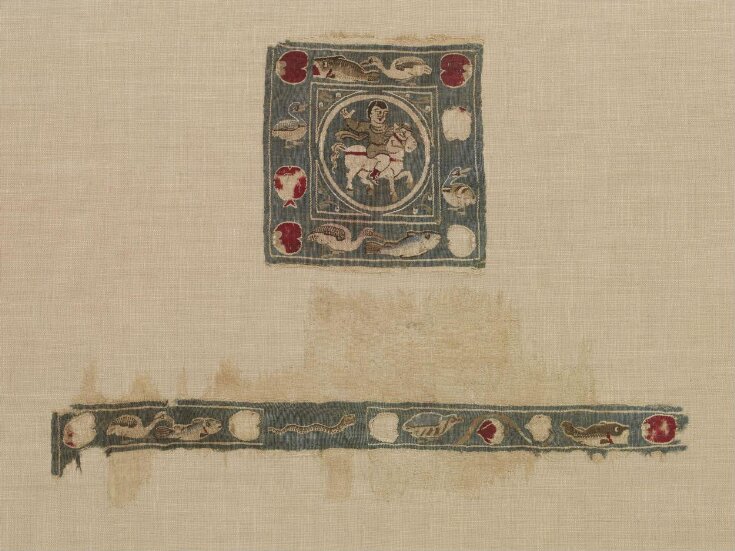
This delicately woven fragmentary shoulder band and the panel with which it is associated- (see image) is a rare survivor when compared to the numerous wool and linen examples which were discovered in the burial grounds of Egypt.
Silk production was not native to Egypt and silk weaving of this kind may have been imported, and is therefore of particular interest and value. The scale of the panel and shoulder band suggest that this may have come from a child's tunic (and probably a boy's given the theme), and if so he must have come from a high ranking family. The hunting scene contains an ibis, two fish, an asp and a quail These representations come from late classical art and depict the hunt as both a sport and a source of food.
Silk production was not native to Egypt and silk weaving of this kind may have been imported, and is therefore of particular interest and value. The scale of the panel and shoulder band suggest that this may have come from a child's tunic (and probably a boy's given the theme), and if so he must have come from a high ranking family. The hunting scene contains an ibis, two fish, an asp and a quail These representations come from late classical art and depict the hunt as both a sport and a source of food.
Object details
| Categories | |
| Object type | |
| Materials and techniques | Tapestry-woven silk |
| Brief description | tapestry woven silk, 400-699, Egyptian; Snake quail fish duck, blue-green ground |
| Physical description | Part of a shoulder band from a tunic |
| Dimensions |
|
| Style | |
| Credit line | Given by Sir C. Purdon Clarke, C.V.O., C.I.E. |
| Production | The linen tunic from which this band and the associated panel came, were probably made up in Egypt but the silk weaving may have been done elsewhere |
| Subjects depicted | |
| Association | |
| Summary | This delicately woven fragmentary shoulder band and the panel with which it is associated- (see image) is a rare survivor when compared to the numerous wool and linen examples which were discovered in the burial grounds of Egypt. Silk production was not native to Egypt and silk weaving of this kind may have been imported, and is therefore of particular interest and value. The scale of the panel and shoulder band suggest that this may have come from a child's tunic (and probably a boy's given the theme), and if so he must have come from a high ranking family. The hunting scene contains an ibis, two fish, an asp and a quail These representations come from late classical art and depict the hunt as both a sport and a source of food. |
| Associated object | |
| Collection | |
| Accession number | 335-1887 |
About this object record
Explore the Collections contains over a million catalogue records, and over half a million images. It is a working database that includes information compiled over the life of the museum. Some of our records may contain offensive and discriminatory language, or reflect outdated ideas, practice and analysis. We are committed to addressing these issues, and to review and update our records accordingly.
You can write to us to suggest improvements to the record.
Suggest feedback
You can write to us to suggest improvements to the record.
Suggest feedback
| Record created | February 13, 2004 |
| Record URL |
Download as: JSONIIIF Manifest
