
The Duet
Oil Painting
1749 (made)
1749 (made)
| Artist/Maker | |
| Place of origin |
Object Type
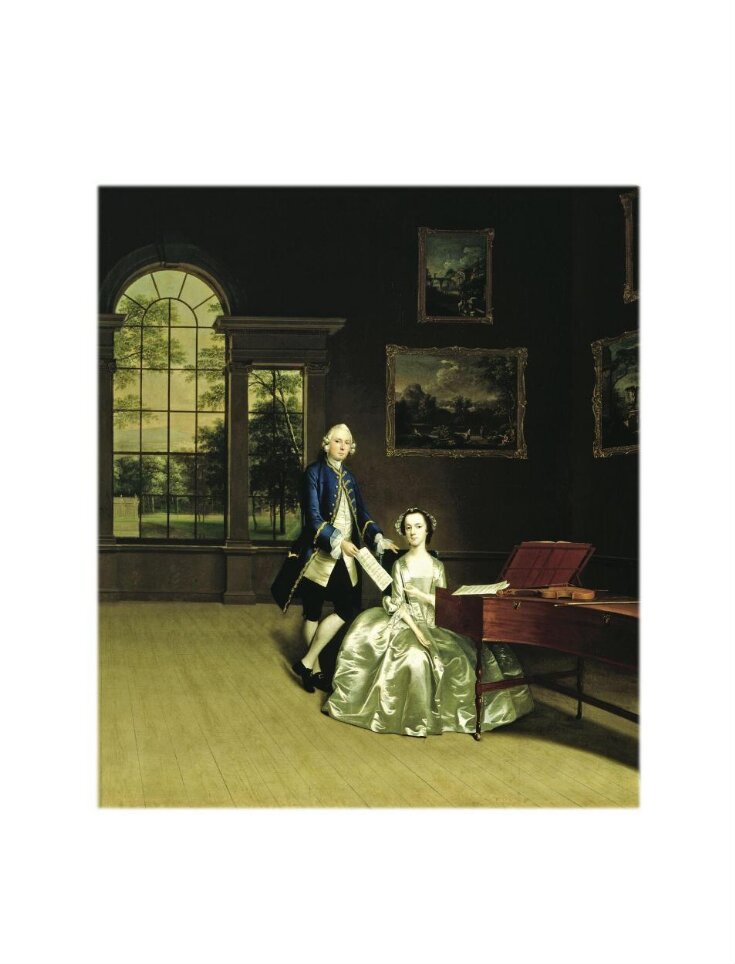
Group portraits like this oil painting of an unknown couple were popular from about 1730. Paintings showing proud owners at home were a major source of income for many painters in Britain in this period.
Subjects Depicted
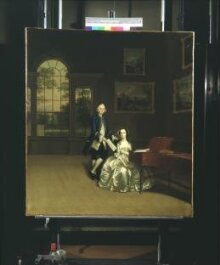
Families appeared in these pictures either outdoors on their estates or in an interior reflecting their social rank. The 'settings' often did not represent real interiors, and Devis tends to show them as sparsely furnished. However, the detail of the paintings on the walls and the view of the park through a fashionable Venetian window imply that the background to the scene may be based on a real house. The woman is shown seated at a harpsichord and a man standing behind handing her sheet music, implying wealth, culture, taste, harmony, and leisure.
People
The painter Devis was famous for informal portraits like this one, known generally in the 18th century as 'conversation pieces'. these were usually small canvases depicting groups of figures taking tea, playing cards and music, in contrast to the solemn, formal and static nature of later 17th-century portraiture. Devis's customers tended to come from the class of wealthy landowners rather than from the nobility, though both groups often preferred the new, relaxed and agreeable way of being portrayed.
Group portraits like this oil painting of an unknown couple were popular from about 1730. Paintings showing proud owners at home were a major source of income for many painters in Britain in this period.
Subjects Depicted
Families appeared in these pictures either outdoors on their estates or in an interior reflecting their social rank. The 'settings' often did not represent real interiors, and Devis tends to show them as sparsely furnished. However, the detail of the paintings on the walls and the view of the park through a fashionable Venetian window imply that the background to the scene may be based on a real house. The woman is shown seated at a harpsichord and a man standing behind handing her sheet music, implying wealth, culture, taste, harmony, and leisure.
People
The painter Devis was famous for informal portraits like this one, known generally in the 18th century as 'conversation pieces'. these were usually small canvases depicting groups of figures taking tea, playing cards and music, in contrast to the solemn, formal and static nature of later 17th-century portraiture. Devis's customers tended to come from the class of wealthy landowners rather than from the nobility, though both groups often preferred the new, relaxed and agreeable way of being portrayed.
Object details
| Categories | |
| Object type | |
| Parts | This object consists of 2 parts.
|
| Title | The Duet (popular title) |
| Materials and techniques | oil on canvas |
| Brief description | Painting of a gentleman and a lady in an interior, the lady seated at a harpsichord. British, 1749. Painted by Arthur Devis. |
| Physical description | An oil painting of a domestic interior with a woman seated at a harpsichord and a man standing behind handing her sheet music. There are paintings on the walls and there is a view of a landscape garden through a Venetian window. |
| Dimensions |
|
| Style | |
| Marks and inscriptions | 'Artr. Devis fe. 1749' (Signature; Latin (abbreviated); lower right, on the stretcher of the harpsichord; painting (image-making); oil colour) |
| Gallery label | British Galleries:
Group portraits like this painting of an unknown couple were popular from about 1730. Families appeared either outdoors on their estates or in an interior reflecting their social rank. The painter Devis was famous for such 'conversation pieces' showing families in interiors that suggest their 'genteel' lifestyle. The settings often did not represent real interiors.(27/03/2003) |
| Credit line | Bequeathed by Ernest E. Cook through Art Fund |
| Object history | Bequeathed by Ernest E. Cook through the National Art Collections Fund, 1955 |
| Subjects depicted | |
| Summary | Object Type Group portraits like this oil painting of an unknown couple were popular from about 1730. Paintings showing proud owners at home were a major source of income for many painters in Britain in this period. Subjects Depicted Families appeared in these pictures either outdoors on their estates or in an interior reflecting their social rank. The 'settings' often did not represent real interiors, and Devis tends to show them as sparsely furnished. However, the detail of the paintings on the walls and the view of the park through a fashionable Venetian window imply that the background to the scene may be based on a real house. The woman is shown seated at a harpsichord and a man standing behind handing her sheet music, implying wealth, culture, taste, harmony, and leisure. People The painter Devis was famous for informal portraits like this one, known generally in the 18th century as 'conversation pieces'. these were usually small canvases depicting groups of figures taking tea, playing cards and music, in contrast to the solemn, formal and static nature of later 17th-century portraiture. Devis's customers tended to come from the class of wealthy landowners rather than from the nobility, though both groups often preferred the new, relaxed and agreeable way of being portrayed. |
| Bibliographic reference | 100 Great Paintings in The Victoria & Albert Museum . London: V&A, 1985, p.64
|
| Collection | |
| Accession number | P.31-1955 |
About this object record
Explore the Collections contains over a million catalogue records, and over half a million images. It is a working database that includes information compiled over the life of the museum. Some of our records may contain offensive and discriminatory language, or reflect outdated ideas, practice and analysis. We are committed to addressing these issues, and to review and update our records accordingly.
You can write to us to suggest improvements to the record.
Suggest feedback
You can write to us to suggest improvements to the record.
Suggest feedback
| Record created | August 12, 1998 |
| Record URL |
Download as: JSONIIIF Manifest
