
Snuff Rasp
1670-1730 (made)
| Artist/Maker | |
| Place of origin |
Although tobacco was introduced to Europe in the sixteenth century, the way in which it was used differed greatly from modern habits. A fine tobacco powder known as snuff was inhaled from the back of the hand or the fingertips. Dried tobacco leaves were generally sold in tightly bound bundles, and, although commercially produced snuff was available, many snuffers preferred to make their own. Snuff rasps like this one were developed to be conveniently carried in a pocket so that a portion of snuff could be prepared at any time by grinding a bundle of dried tobacco leaves on the metal grater or rasp. Many snuff rasps incorporate a snuff-box to hold any excess produced, although this example does not.
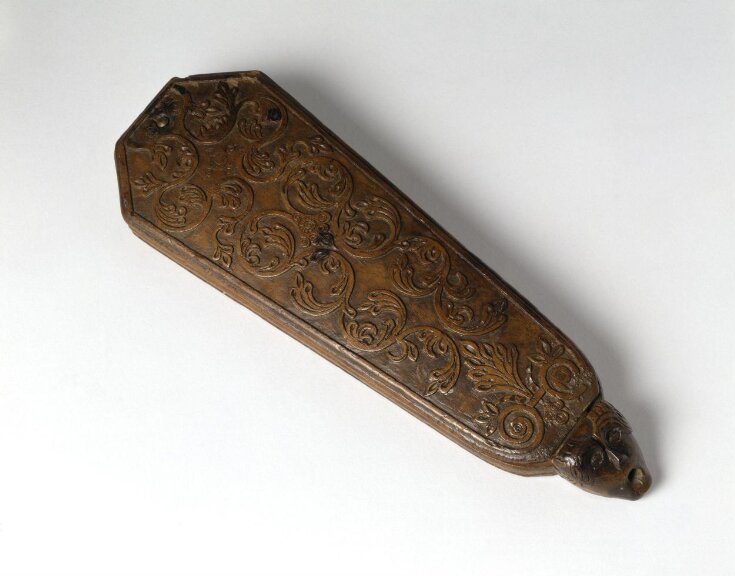
Snuff-taking was an expensive habit and could only be afforded by the well-to-do, with the result that snuff-related objects, like rasps and boxes are often made from precious materials like ivory, and are beautifully decorated with carving or inlay. This French example is carved from walnut and unusually features a pivoting cover to the metal rasp.
Snuff-taking was an expensive habit and could only be afforded by the well-to-do, with the result that snuff-related objects, like rasps and boxes are often made from precious materials like ivory, and are beautifully decorated with carving or inlay. This French example is carved from walnut and unusually features a pivoting cover to the metal rasp.
Object details
| Category | |
| Object type | |
| Materials and techniques | Carved walnut with tinned iron fittings |
| Brief description | Snuff rasp of carved walnut, French 1670-1730 |
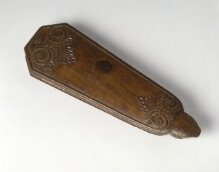
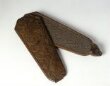
| Physical description | Carved walnut snuff in two parts joined by a pin. The lid, which swivels out to expose the metal grater is carved with leafy scrollwork, the back with volutes enriched with leaves. The end of grater terminates in a mask with open mouth, through which the snuff grated into the body of the rasp can be poured out. |
| Dimensions |
|
| Credit line | Given by J. H. Fitzhenry |
| Summary | Although tobacco was introduced to Europe in the sixteenth century, the way in which it was used differed greatly from modern habits. A fine tobacco powder known as snuff was inhaled from the back of the hand or the fingertips. Dried tobacco leaves were generally sold in tightly bound bundles, and, although commercially produced snuff was available, many snuffers preferred to make their own. Snuff rasps like this one were developed to be conveniently carried in a pocket so that a portion of snuff could be prepared at any time by grinding a bundle of dried tobacco leaves on the metal grater or rasp. Many snuff rasps incorporate a snuff-box to hold any excess produced, although this example does not. Snuff-taking was an expensive habit and could only be afforded by the well-to-do, with the result that snuff-related objects, like rasps and boxes are often made from precious materials like ivory, and are beautifully decorated with carving or inlay. This French example is carved from walnut and unusually features a pivoting cover to the metal rasp. |
| Collection | |
| Accession number | 1415-1902 |
About this object record
Explore the Collections contains over a million catalogue records, and over half a million images. It is a working database that includes information compiled over the life of the museum. Some of our records may contain offensive and discriminatory language, or reflect outdated ideas, practice and analysis. We are committed to addressing these issues, and to review and update our records accordingly.
You can write to us to suggest improvements to the record.
Suggest feedback
You can write to us to suggest improvements to the record.
Suggest feedback
| Record created | November 7, 2003 |
| Record URL |
Download as: JSONIIIF Manifest
