Candlestand from Althorp pier set
Candlestand
1982 (made)
1982 (made)
| Artist/Maker | |
| Place of origin |
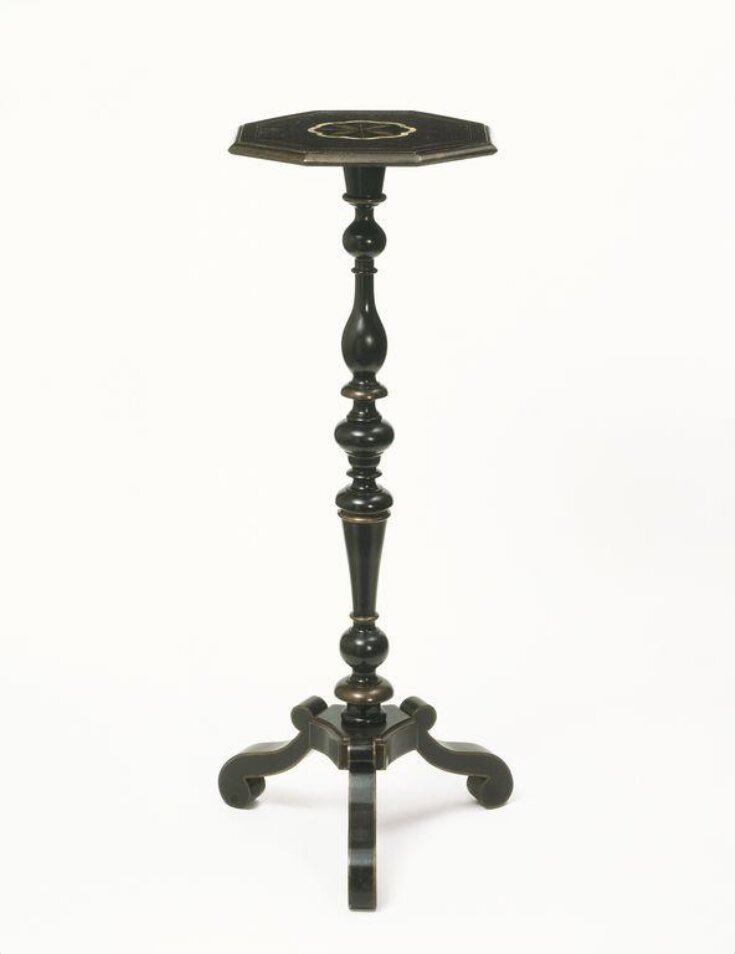
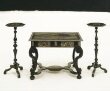
This candlestand was made by Partridge (Fine Arts) Ltd in 1981 to match the surviving 17th-century Italian stand which formed part of a set of furniture placed against the pier, between windows, in the state apartments of Althorp, Northamptonshire. It is understood that this furniture formed part of the furnishing of the house when it belonged to the Earl of Sunderland (1641-1702).
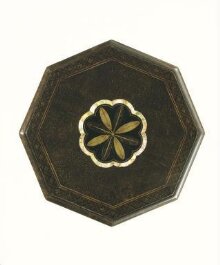
The stand is made of pinewood with a top painted in imitation of Japanese lacquer, a process known as 'japanning', with a mother-of-pearl border.
The stand is made of pinewood with a top painted in imitation of Japanese lacquer, a process known as 'japanning', with a mother-of-pearl border.
Object details
| Categories | |
| Object type | |
| Title | Candlestand from Althorp pier set (generic title) |
| Materials and techniques | Pine, with lacquer panel, painted black and gold |
| Brief description | Candlestand, copy of a candlestand from Althorp [W74B-1981, 1675-85], made by Partridge Fine Arts Ltd, pine wood and mother of pearl, 1982 |
| Physical description | A candlestand made of pine, the top painted in imitation of Japanese lacquer with a mother-of-pearl border. The rest of the stand is painted black. |
| Dimensions |
|
| Gallery label |
|
| Credit line | Purchased with the assistance of the Brigadier Clark Fund through Art Fund |
| Object history | Made by Partridge (Fine Arts) Ltd., to match the original surviving stand. Purchased in 1981. England |
| Subjects depicted | |
| Summary | This candlestand was made by Partridge (Fine Arts) Ltd in 1981 to match the surviving 17th-century Italian stand which formed part of a set of furniture placed against the pier, between windows, in the state apartments of Althorp, Northamptonshire. It is understood that this furniture formed part of the furnishing of the house when it belonged to the Earl of Sunderland (1641-1702). The stand is made of pinewood with a top painted in imitation of Japanese lacquer, a process known as 'japanning', with a mother-of-pearl border. |
| Collection | |
| Accession number | W.74C-1981 |
About this object record
Explore the Collections contains over a million catalogue records, and over half a million images. It is a working database that includes information compiled over the life of the museum. Some of our records may contain offensive and discriminatory language, or reflect outdated ideas, practice and analysis. We are committed to addressing these issues, and to review and update our records accordingly.
You can write to us to suggest improvements to the record.
Suggest feedback
You can write to us to suggest improvements to the record.
Suggest feedback
| Record created | April 11, 2003 |
| Record URL |
Download as: JSON
