
Vase with Flowers (chimney board)
Chimney Board
ca. 1720- ca.1740 (made)
ca. 1720- ca.1740 (made)
| Artist/Maker | |
| Place of origin |
Object Type
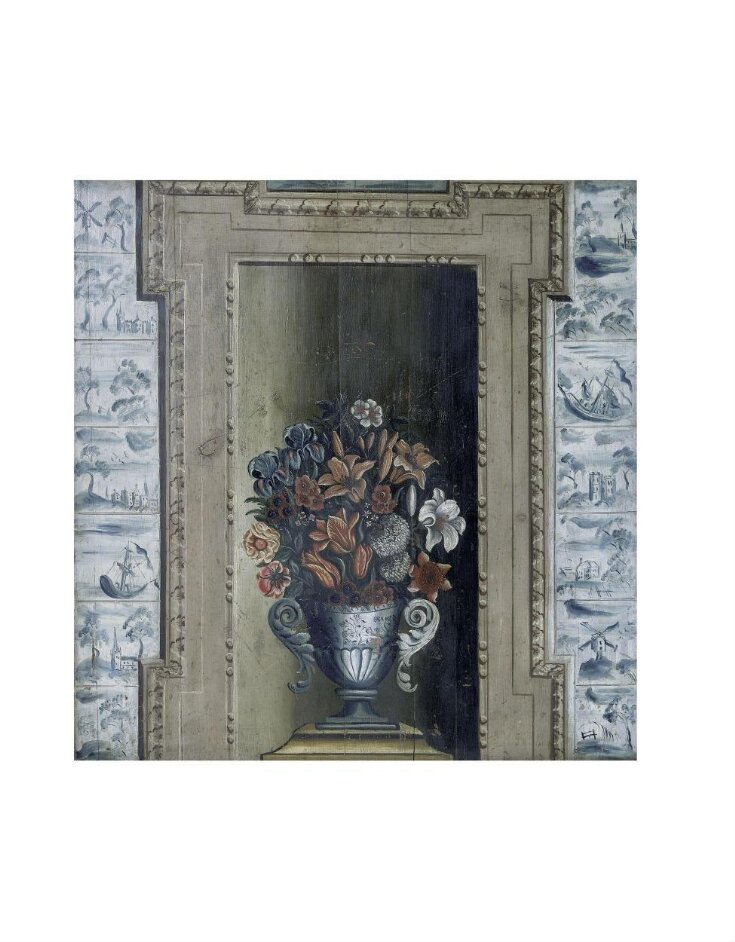
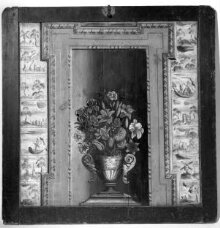
This chimney board is painted in tromp l'oeil to simulate a border of blue and white English delftware tiles. On the hearth, a blue and white vase supports an arrangement of irises, lilies, roses and tulips. The decoration reflects the common practice of placing a decorative vase or a vase of flowers on the hearth during the summer. On the top rail is part of the original turnbuckle (a knob which swivels to release the frame), used to hold the board in place.
Ownership & Use
Chimney boards were used to seal hearths against draughts and soot in the summer, and usually feature paintings of vases with flowers. The earliest surviving chimney boards are Continental and date from the late 17th century. English chimney boards were sometimes decorated by the ladies of the house in a variety of styles.
Chimney boards were not widely used in England. They were more popular in the American colonies, where they became a branch of folk art.
Materials & Making
The chimney board is of panel and frame construction. The frame would prevent the panel from bowing and would have allowed for inevitable shrinkage of the panel, ensuring that the overall size of the chimney board remained constant. This was to ensure that it fitted closely into the fireplace for which it was intended.
This chimney board is painted in tromp l'oeil to simulate a border of blue and white English delftware tiles. On the hearth, a blue and white vase supports an arrangement of irises, lilies, roses and tulips. The decoration reflects the common practice of placing a decorative vase or a vase of flowers on the hearth during the summer. On the top rail is part of the original turnbuckle (a knob which swivels to release the frame), used to hold the board in place.
Ownership & Use
Chimney boards were used to seal hearths against draughts and soot in the summer, and usually feature paintings of vases with flowers. The earliest surviving chimney boards are Continental and date from the late 17th century. English chimney boards were sometimes decorated by the ladies of the house in a variety of styles.
Chimney boards were not widely used in England. They were more popular in the American colonies, where they became a branch of folk art.
Materials & Making
The chimney board is of panel and frame construction. The frame would prevent the panel from bowing and would have allowed for inevitable shrinkage of the panel, ensuring that the overall size of the chimney board remained constant. This was to ensure that it fitted closely into the fireplace for which it was intended.
Object details
| Categories | |
| Object type | |
| Title | Vase with Flowers (chimney board) (generic title) |
| Materials and techniques | Oil on pine panel |
| Brief description | Chimney board of pine, of frame and panel construction, painted in oil colours, ca.1720-ca. 1740 |
| Physical description | This chimney board is painted in trompe-l'oeil to simulate a border of blue and white English delftware tiles. On the hearth, a blue and white vase supports an arrangement of irises, lilies, roses and tulips. The chimney board is of panel and frame construction, in pine. On the top rail is part of the original turnbuckle (a knob which swivels to release the frame), used to hold the board in place. |
| Dimensions |
|
| Style | |
| Gallery label | British Galleries:
Chimneyboards were used to seal and decorate hearths in the summer when fires were not needed. Very few have survived. This one shows what seem to be English copies of Dutch 'Delft' tiles of the kind that might have lined a real hearth, and a vase of fresh flowers - a frequent sight in hearths during the summer.(27/03/2003) |
| Credit line | Supported by the Friends of the V&A |
| Object history | Purchased 1994 |
| Production | British School |
| Subjects depicted | |
| Summary | Object Type This chimney board is painted in tromp l'oeil to simulate a border of blue and white English delftware tiles. On the hearth, a blue and white vase supports an arrangement of irises, lilies, roses and tulips. The decoration reflects the common practice of placing a decorative vase or a vase of flowers on the hearth during the summer. On the top rail is part of the original turnbuckle (a knob which swivels to release the frame), used to hold the board in place. Ownership & Use Chimney boards were used to seal hearths against draughts and soot in the summer, and usually feature paintings of vases with flowers. The earliest surviving chimney boards are Continental and date from the late 17th century. English chimney boards were sometimes decorated by the ladies of the house in a variety of styles. Chimney boards were not widely used in England. They were more popular in the American colonies, where they became a branch of folk art. Materials & Making The chimney board is of panel and frame construction. The frame would prevent the panel from bowing and would have allowed for inevitable shrinkage of the panel, ensuring that the overall size of the chimney board remained constant. This was to ensure that it fitted closely into the fireplace for which it was intended. |
| Collection | |
| Accession number | W.12-1994 |
About this object record
Explore the Collections contains over a million catalogue records, and over half a million images. It is a working database that includes information compiled over the life of the museum. Some of our records may contain offensive and discriminatory language, or reflect outdated ideas, practice and analysis. We are committed to addressing these issues, and to review and update our records accordingly.
You can write to us to suggest improvements to the record.
Suggest feedback
You can write to us to suggest improvements to the record.
Suggest feedback
| Record created | March 27, 2003 |
| Record URL |
Download as: JSONIIIF Manifest
