
Cravat
1650-1675 (made)
| Artist/Maker | |
| Place of origin |
Object Type
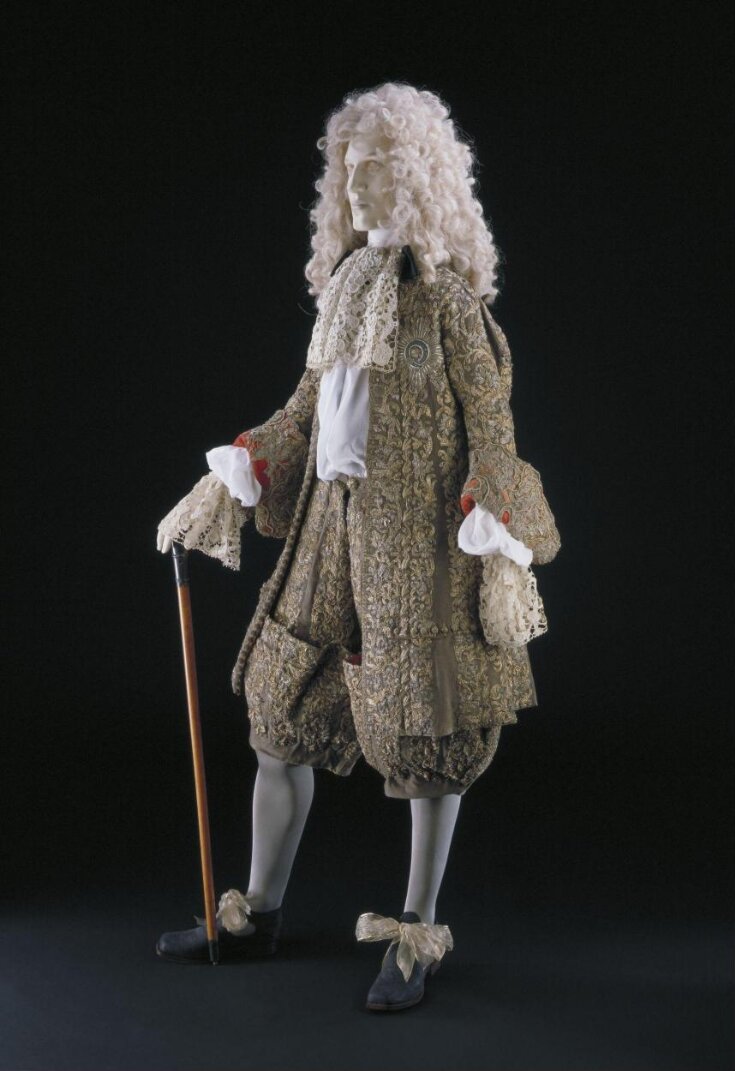
This cravat is made of a heavily textured needle lace, known as gros point de Venise, which was the most fashionable choice between the 1660s and the 1680s, for both men and women. During this period, extravagant displays of lace were increasingly worn as a mark of wealth and status. The showiest effects were achieved with lace at the throat and wrist, setting off the face and hands, but a fashionable man might even have matching lace borders trimming his boot hose, or stockings.
Materials & Making
English travellers often purchased their lace abroad and brought it home. Lace for cravats was available either by length or by the piece, made to shape. It was usually made up by a milliner. Sometimes, at a later stage, it was adapted into a newly fashionable style.
Trading
In an attempt to protect the English lace industry, a royal proclamation was issued in 1662 forbidding the importation or selling of foreign lace. The royal family was exempt from this prohibition. It also seems to have been ignored by members of the court and other fashionable people, since Venetian needle lace continued to be freely sold and worn in London.
This cravat is made of a heavily textured needle lace, known as gros point de Venise, which was the most fashionable choice between the 1660s and the 1680s, for both men and women. During this period, extravagant displays of lace were increasingly worn as a mark of wealth and status. The showiest effects were achieved with lace at the throat and wrist, setting off the face and hands, but a fashionable man might even have matching lace borders trimming his boot hose, or stockings.
Materials & Making
English travellers often purchased their lace abroad and brought it home. Lace for cravats was available either by length or by the piece, made to shape. It was usually made up by a milliner. Sometimes, at a later stage, it was adapted into a newly fashionable style.
Trading
In an attempt to protect the English lace industry, a royal proclamation was issued in 1662 forbidding the importation or selling of foreign lace. The royal family was exempt from this prohibition. It also seems to have been ignored by members of the court and other fashionable people, since Venetian needle lace continued to be freely sold and worn in London.
Delve deeper
Discover more about this object

Object details
| Categories | |
| Object type | |
| Parts | This object consists of 3 parts.
|
| Materials and techniques | Venetian needle lace |
| Brief description | Cravat, Gros Point de Venise, Venetian, 1650-1675, attached to fine linen |
| Physical description | Venetian needle lace cravat, with two borders attached to a fine linen panel |
| Dimensions |
|
| Gallery label | British Galleries:
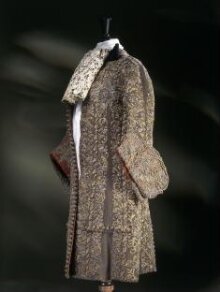
The heavy silver embroidery on this suit would have sparkled in both daylight and candle-light. The waistcoat, now lost, was probably of a contrasting rich fabric and colour. The fashion of a three-piece ensemble (coat, breeches and waistcoat, instead of doublet and breeches), was introduced from France in the 1660s, as was the full wig shown in the mezzotint portrait of James of about 1676 (see photograph).(27/03/2003) |
| Credit line | Purchased with Art Fund support |
| Summary | Object Type This cravat is made of a heavily textured needle lace, known as gros point de Venise, which was the most fashionable choice between the 1660s and the 1680s, for both men and women. During this period, extravagant displays of lace were increasingly worn as a mark of wealth and status. The showiest effects were achieved with lace at the throat and wrist, setting off the face and hands, but a fashionable man might even have matching lace borders trimming his boot hose, or stockings. Materials & Making English travellers often purchased their lace abroad and brought it home. Lace for cravats was available either by length or by the piece, made to shape. It was usually made up by a milliner. Sometimes, at a later stage, it was adapted into a newly fashionable style. Trading In an attempt to protect the English lace industry, a royal proclamation was issued in 1662 forbidding the importation or selling of foreign lace. The royal family was exempt from this prohibition. It also seems to have been ignored by members of the court and other fashionable people, since Venetian needle lace continued to be freely sold and worn in London. |
| Collection | |
| Accession number | T.41-1947 |
About this object record
Explore the Collections contains over a million catalogue records, and over half a million images. It is a working database that includes information compiled over the life of the museum. Some of our records may contain offensive and discriminatory language, or reflect outdated ideas, practice and analysis. We are committed to addressing these issues, and to review and update our records accordingly.
You can write to us to suggest improvements to the record.
Suggest feedback
You can write to us to suggest improvements to the record.
Suggest feedback
| Record created | March 27, 2003 |
| Record URL |
Download as: JSONIIIF Manifest
