
Button
ca. 1795 (made)
| Artist/Maker | |
| Place of origin |
Object Type
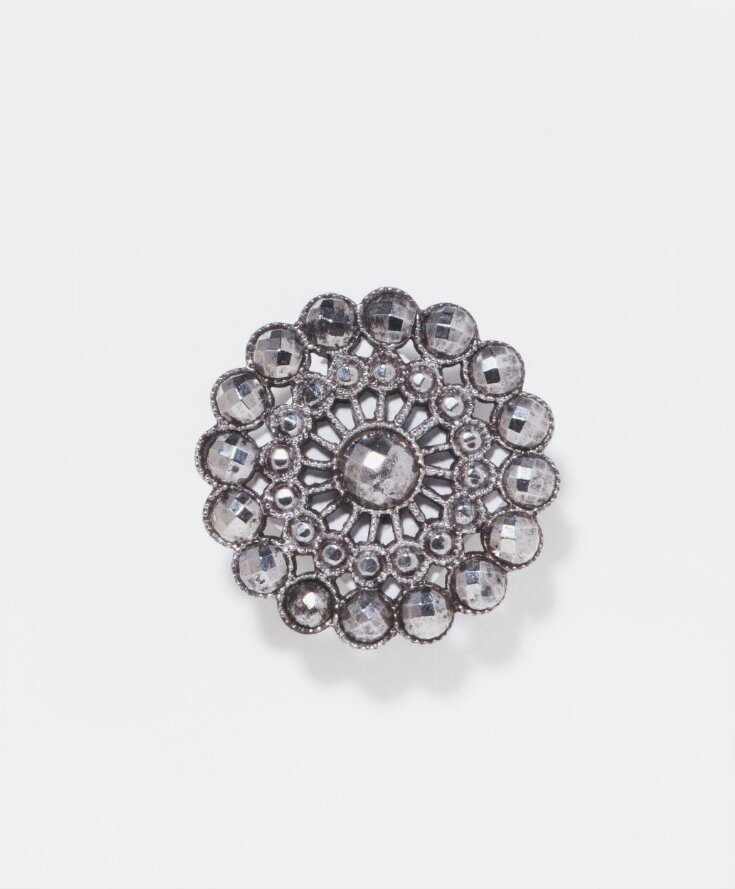
In the late 18th century cut-steel buttons were very fashionable for gentlemen. They were also very expensive. The faceted studs with which they were set were designed to sparkle and reflect light.
Materials & Making
The most famous maker of cut-steel jewellery at the end of the 18th century was Matthew Boulton who was in partnership with John Fothergill from 1762 to 1781 and James Watt from 1775 to 1800. Watts' 'rotative steam engine' was installed in the Soho Manufactory in Birmingham in 1788. It was known as the 'Lap Engine' and drove the wheels used to grind and polish various steel wares including buttons, which were one of the principal products of Soho.
Design & Designing
The Boulton pattern books show many pages of designs for buttons and customers were supplied with cards of designs from which to make their choice. In 1777 Boulton was charging 28 guineas for a full set of cut-steel buttons. A caricature published in the same year entitled 'Steel buttons / Coup de Bouton' shows a fashionably dressed lady knocked backwards by the light reflected from the coat buttons of a gentleman.
In the late 18th century cut-steel buttons were very fashionable for gentlemen. They were also very expensive. The faceted studs with which they were set were designed to sparkle and reflect light.
Materials & Making
The most famous maker of cut-steel jewellery at the end of the 18th century was Matthew Boulton who was in partnership with John Fothergill from 1762 to 1781 and James Watt from 1775 to 1800. Watts' 'rotative steam engine' was installed in the Soho Manufactory in Birmingham in 1788. It was known as the 'Lap Engine' and drove the wheels used to grind and polish various steel wares including buttons, which were one of the principal products of Soho.
Design & Designing
The Boulton pattern books show many pages of designs for buttons and customers were supplied with cards of designs from which to make their choice. In 1777 Boulton was charging 28 guineas for a full set of cut-steel buttons. A caricature published in the same year entitled 'Steel buttons / Coup de Bouton' shows a fashionably dressed lady knocked backwards by the light reflected from the coat buttons of a gentleman.
Object details
| Categories | |
| Object type | |
| Materials and techniques | Cut steel, the outer rim of beads individually riveted in place on a cast plate |
| Brief description | Steel button |
| Dimensions |
|
| Gallery label | British Galleries:
Cut steel buttons were an extremely expensive and fashionable dress accessory for men. In 1777, the 'Earl of W' was charged 28 guineas (£29.40) for a set. Customers were supplied with cards of designs from which to make their choice. Matthew Boulton's pattern books contain many pages of designs showing the variety and popularity of buttons.(27/03/2003) |
| Credit line | Given by Mrs Barbara Gooddy |
| Object history | Probably manufactured in Birmingham |
| Summary | Object Type In the late 18th century cut-steel buttons were very fashionable for gentlemen. They were also very expensive. The faceted studs with which they were set were designed to sparkle and reflect light. Materials & Making The most famous maker of cut-steel jewellery at the end of the 18th century was Matthew Boulton who was in partnership with John Fothergill from 1762 to 1781 and James Watt from 1775 to 1800. Watts' 'rotative steam engine' was installed in the Soho Manufactory in Birmingham in 1788. It was known as the 'Lap Engine' and drove the wheels used to grind and polish various steel wares including buttons, which were one of the principal products of Soho. Design & Designing The Boulton pattern books show many pages of designs for buttons and customers were supplied with cards of designs from which to make their choice. In 1777 Boulton was charging 28 guineas for a full set of cut-steel buttons. A caricature published in the same year entitled 'Steel buttons / Coup de Bouton' shows a fashionably dressed lady knocked backwards by the light reflected from the coat buttons of a gentleman. |
| Bibliographic reference | Stemp, Sinty, "Ornamental or Useful: A Cut Steel Chatelaine by Boulton and Wedgwood", The Journal of the Antique Metalware Society, Vol. 17, June 2009, ISSN. 1359124X, p. 5, ill. |
| Collection | |
| Accession number | M.30-1997 |
About this object record
Explore the Collections contains over a million catalogue records, and over half a million images. It is a working database that includes information compiled over the life of the museum. Some of our records may contain offensive and discriminatory language, or reflect outdated ideas, practice and analysis. We are committed to addressing these issues, and to review and update our records accordingly.
You can write to us to suggest improvements to the record.
Suggest feedback
You can write to us to suggest improvements to the record.
Suggest feedback
| Record created | March 27, 2003 |
| Record URL |
Download as: JSONIIIF Manifest
