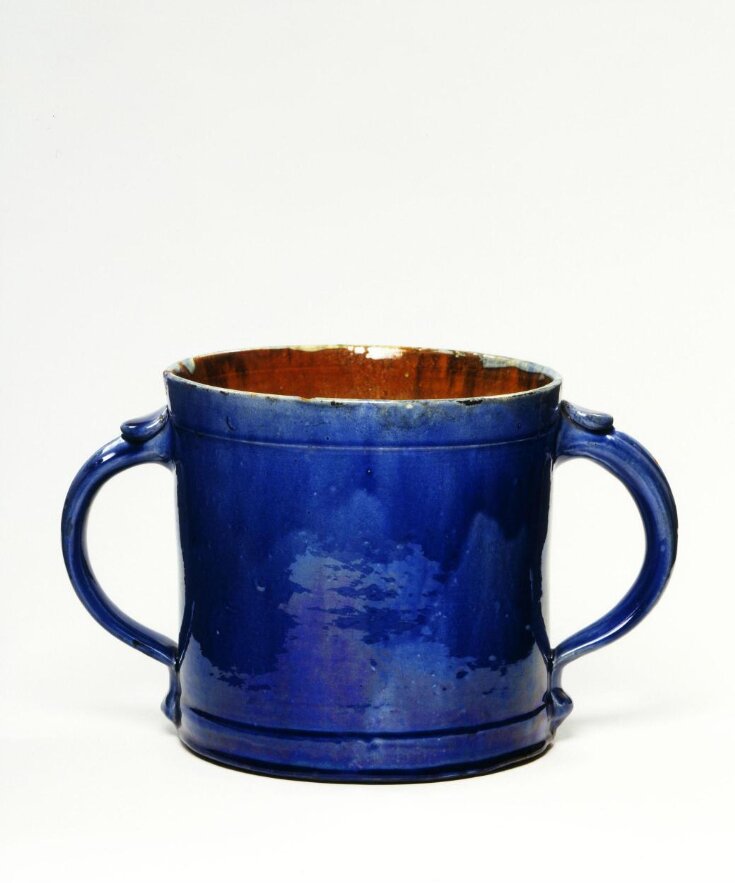

Two-Handled Mug
1890-1900 (made)
| Artist/Maker | |
| Place of origin |
Object Type
This generous-sized mug is a type known as a 'tyg', made in England from the 17th century. Tygs usually have two or four handles, but sometimes as many as eleven, arranged equidistantly around the body. They may also have several spouts, and be highly decorated with applied patterning and lettering. Tygs were traditionally associated with communal, celebratory drinking at weddings and harvest festivals. They may also have been used for warm spiced ale or posset in winter. The earliest-known dated tyg was made in the area around Wrotham, Kent. Country skills and cultural traditions, such as the making of tygs, were especially attractive to followers of the Arts and Crafts movement.
Materials & Making
The maker of this mug, Edwin Beer Fishley (1832-1911), ran a family-owned pottery established at the end of the 18th century in Fremington, Devon. Using the local red clay and skills handed down through generations, Fishley made useful wares, sometimes highly decorated. However, he was aware of urban fashions and may have adapted fashionable forms and styles for his products to make them more saleable. He was also interested in using lustrous glazes, references to historic ceramics and new shapes.
This generous-sized mug is a type known as a 'tyg', made in England from the 17th century. Tygs usually have two or four handles, but sometimes as many as eleven, arranged equidistantly around the body. They may also have several spouts, and be highly decorated with applied patterning and lettering. Tygs were traditionally associated with communal, celebratory drinking at weddings and harvest festivals. They may also have been used for warm spiced ale or posset in winter. The earliest-known dated tyg was made in the area around Wrotham, Kent. Country skills and cultural traditions, such as the making of tygs, were especially attractive to followers of the Arts and Crafts movement.
Materials & Making
The maker of this mug, Edwin Beer Fishley (1832-1911), ran a family-owned pottery established at the end of the 18th century in Fremington, Devon. Using the local red clay and skills handed down through generations, Fishley made useful wares, sometimes highly decorated. However, he was aware of urban fashions and may have adapted fashionable forms and styles for his products to make them more saleable. He was also interested in using lustrous glazes, references to historic ceramics and new shapes.
Object details
| Categories | |
| Object type | |
| Materials and techniques | Earthenware, slip-decorated, blue-glazed |
| Brief description | Blue double handled mug |
| Dimensions |
|
| Gallery label | British Galleries:
True to Arts and Crafts traditions, this mug was inspired by country pottery of the type used in Devon at harvest time. These drinking vessels were known as 'tygs' and often had three or more handles dividing the rim into sections. They could be highly decorated with slip-trailed patterns. However, this mug relies entirely on its simple, functional form, suggesting that Fishley was aware of fashionable taste.(27/03/2003) |
| Credit line | Given by Miss Marjorie Hunt |
| Object history | Made by Edwin Beer Fishley (born in 1832, died in 1911) at the Fremington Pottery, Barnstaple, Devon |
| Summary | Object Type This generous-sized mug is a type known as a 'tyg', made in England from the 17th century. Tygs usually have two or four handles, but sometimes as many as eleven, arranged equidistantly around the body. They may also have several spouts, and be highly decorated with applied patterning and lettering. Tygs were traditionally associated with communal, celebratory drinking at weddings and harvest festivals. They may also have been used for warm spiced ale or posset in winter. The earliest-known dated tyg was made in the area around Wrotham, Kent. Country skills and cultural traditions, such as the making of tygs, were especially attractive to followers of the Arts and Crafts movement. Materials & Making The maker of this mug, Edwin Beer Fishley (1832-1911), ran a family-owned pottery established at the end of the 18th century in Fremington, Devon. Using the local red clay and skills handed down through generations, Fishley made useful wares, sometimes highly decorated. However, he was aware of urban fashions and may have adapted fashionable forms and styles for his products to make them more saleable. He was also interested in using lustrous glazes, references to historic ceramics and new shapes. |
| Collection | |
| Accession number | CIRC.443A-1962 |
About this object record
Explore the Collections contains over a million catalogue records, and over half a million images. It is a working database that includes information compiled over the life of the museum. Some of our records may contain offensive and discriminatory language, or reflect outdated ideas, practice and analysis. We are committed to addressing these issues, and to review and update our records accordingly.
You can write to us to suggest improvements to the record.
Suggest feedback
You can write to us to suggest improvements to the record.
Suggest feedback
| Record created | March 27, 2003 |
| Record URL |
Download as: JSONIIIF Manifest
