Salt Cellar
ca. 1600 (made)
| Artist/Maker | |
| Place of origin |
Object Type
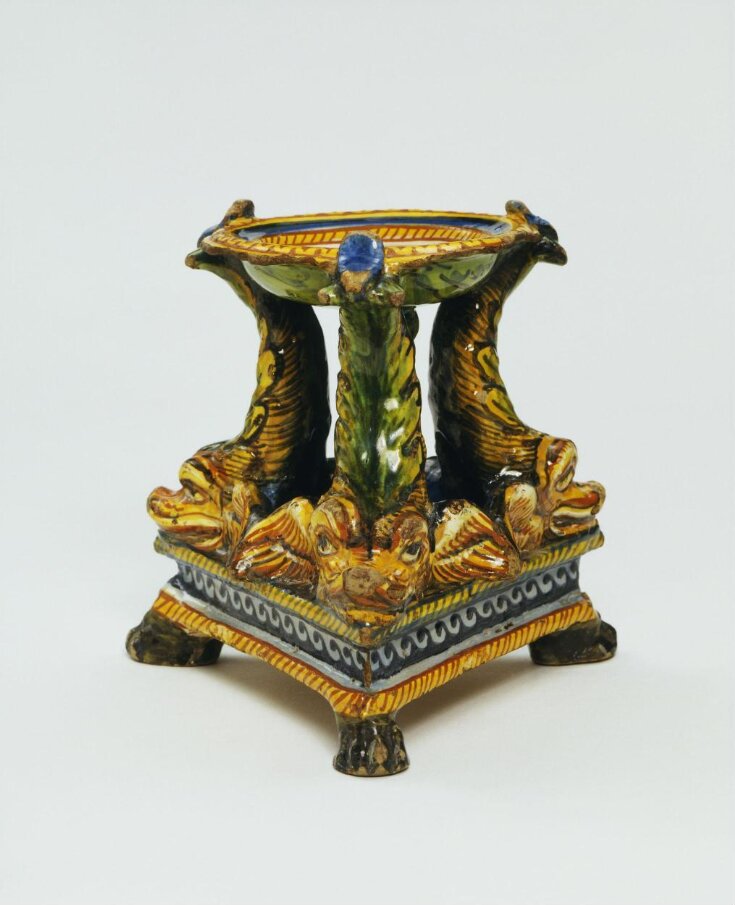
Salt was a precious commodity in the 16th century and salts cellars for use at the table were often elaborately decorated. As salt was derived from the sea, seashells and dolphins were thought to be appropriate decorative elements.
People
Horace Walpole, the 4th Earl of Orford, was renowned for his antiquarian interest and his collection of antiques which he partly amassed himself during his trips abroad. In the Great North Bedchamber of his house, Strawberry Hill, Walpole kept a collection of china, snuff boxes and curios. The guide book to the house of 1774 describes 'A salt cellar of the finest old fayence [tin-glazed earthenware] supported by dolphins'. Walpole's salt, which was sold with the contents of the house in 1843, fits the description of this piece which was acquired by the Museum in 1863, but it is not certain that it is the very same object.
Materials & Making
Tin-glazed earthenware, which could be painted in many different bright colours, was known in Italy as 'maiolica'. Urbino was a famous centre for the manufacture of maiolica. This salt cellar was made with the aid of moulds, which made it possible to shape series of objects relatively cheaply.
Salt was a precious commodity in the 16th century and salts cellars for use at the table were often elaborately decorated. As salt was derived from the sea, seashells and dolphins were thought to be appropriate decorative elements.
People
Horace Walpole, the 4th Earl of Orford, was renowned for his antiquarian interest and his collection of antiques which he partly amassed himself during his trips abroad. In the Great North Bedchamber of his house, Strawberry Hill, Walpole kept a collection of china, snuff boxes and curios. The guide book to the house of 1774 describes 'A salt cellar of the finest old fayence [tin-glazed earthenware] supported by dolphins'. Walpole's salt, which was sold with the contents of the house in 1843, fits the description of this piece which was acquired by the Museum in 1863, but it is not certain that it is the very same object.
Materials & Making
Tin-glazed earthenware, which could be painted in many different bright colours, was known in Italy as 'maiolica'. Urbino was a famous centre for the manufacture of maiolica. This salt cellar was made with the aid of moulds, which made it possible to shape series of objects relatively cheaply.
Object details
| Categories | |
| Object type | |
| Materials and techniques | Maiolica (tin-glazed earthenware) |
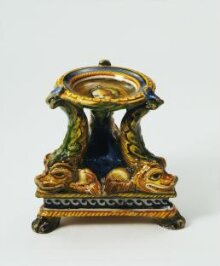
| Brief description | Salt cellar, earthenware, enamelled, bowl painted with a woman bust, upheld by 3 dolphins, Urbino, Italian, ca.1600 |
| Dimensions |
|
| Gallery label | British Galleries:
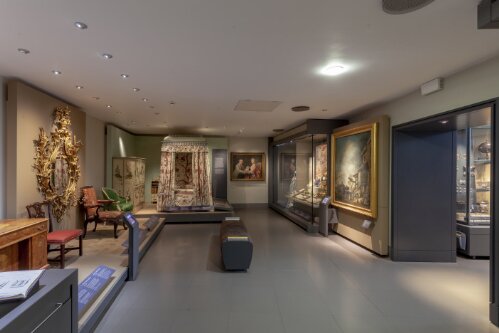
In the Great North Bedchamber at Strawberry Hill, Walpole kept a collection of china, snuff boxes and curios. In 1784, the guide book to the house described this piece as 'A salt cellar of the finest old fayence [tin-glazed earthenware] supported by dolphins'.(27/03/2003) |
| Summary | Object Type Salt was a precious commodity in the 16th century and salts cellars for use at the table were often elaborately decorated. As salt was derived from the sea, seashells and dolphins were thought to be appropriate decorative elements. People Horace Walpole, the 4th Earl of Orford, was renowned for his antiquarian interest and his collection of antiques which he partly amassed himself during his trips abroad. In the Great North Bedchamber of his house, Strawberry Hill, Walpole kept a collection of china, snuff boxes and curios. The guide book to the house of 1774 describes 'A salt cellar of the finest old fayence [tin-glazed earthenware] supported by dolphins'. Walpole's salt, which was sold with the contents of the house in 1843, fits the description of this piece which was acquired by the Museum in 1863, but it is not certain that it is the very same object. Materials & Making Tin-glazed earthenware, which could be painted in many different bright colours, was known in Italy as 'maiolica'. Urbino was a famous centre for the manufacture of maiolica. This salt cellar was made with the aid of moulds, which made it possible to shape series of objects relatively cheaply. |
| Collection | |
| Accession number | 8402-1863 |
About this object record
Explore the Collections contains over a million catalogue records, and over half a million images. It is a working database that includes information compiled over the life of the museum. Some of our records may contain offensive and discriminatory language, or reflect outdated ideas, practice and analysis. We are committed to addressing these issues, and to review and update our records accordingly.
You can write to us to suggest improvements to the record.
Suggest feedback
You can write to us to suggest improvements to the record.
Suggest feedback
| Record created | March 27, 2003 |
| Record URL |
Download as: JSONIIIF Manifest
