
Pin Cushion
1600-1630 (made)
| Artist/Maker | |
| Place of origin |
Object Type
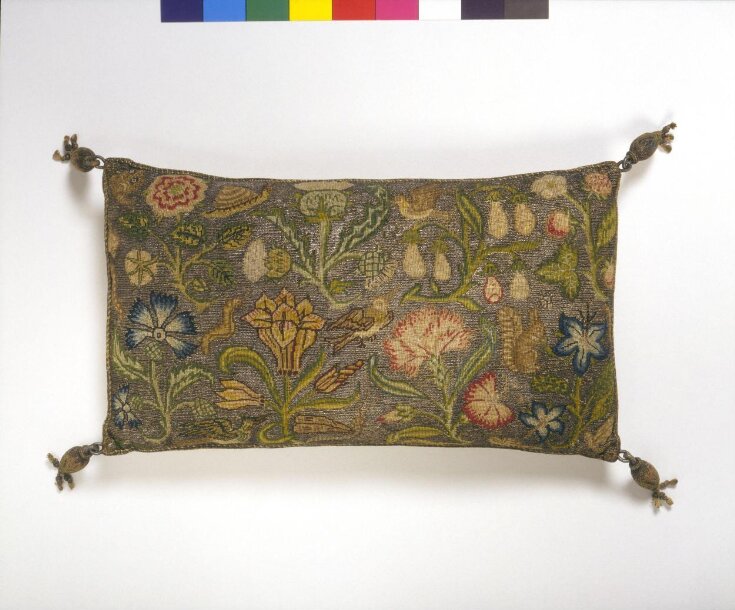
Pin cushions served both functional and decorative purposes. Used for holding the large numbers of pins required to fasten clothing, they were often richly embellished. Along with expensive combs, brushes, and scents, the pin cushion adorned a lady's dressing table.
Materials & Making
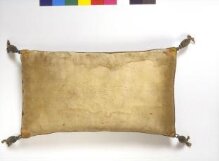
This pin cushion is decorated in canvaswork. Worked in wool, it was a popular form of embroidery, particularly for furnishings such as wall hangings, cushion covers and table carpets. For smaller items, like this pin cushion, silk, silver and silver-gilt threads were often used on a ground of finely woven linen.
Subjects Depicted
The pin cushion bears a pattern of thistles, gilly flowers (carnations), cornflower, rose, borage with a squirrel, birds and insects. These naturalistic forms were typical of the period and match similar designs that decorated clothing.
Pin cushions served both functional and decorative purposes. Used for holding the large numbers of pins required to fasten clothing, they were often richly embellished. Along with expensive combs, brushes, and scents, the pin cushion adorned a lady's dressing table.
Materials & Making
This pin cushion is decorated in canvaswork. Worked in wool, it was a popular form of embroidery, particularly for furnishings such as wall hangings, cushion covers and table carpets. For smaller items, like this pin cushion, silk, silver and silver-gilt threads were often used on a ground of finely woven linen.
Subjects Depicted
The pin cushion bears a pattern of thistles, gilly flowers (carnations), cornflower, rose, borage with a squirrel, birds and insects. These naturalistic forms were typical of the period and match similar designs that decorated clothing.
Object details
| Categories | |
| Object type | |
| Materials and techniques | Canvas work in coloured silk, silver and silver-gilt thread, with satin back and silver and silk thread tassels |
| Brief description | embroidered, 1600-1629, English |
| Physical description | Rectangular pincushion |
| Dimensions |
|
| Gallery label | British Galleries:
PIN CUSHION AND PINS Enormous quanitities of pins were used for the fastening of clothing. Elizabeth I was supplied with 24,000 'pynnes of diverse sorts' just for her coronation. Pins secured the petticoat in a ruffle above the farthingale (hoops that supported a skirt), and held the curves of the ruff in place around the neck. Several dozen might be used for one ensemble. Such a quantity required large pincushions, like the canvas work one here. These pins were found in written documents that were dated between 1620 and 1635.(27/03/2003) |
| Object history | Embroidered in England |
| Summary | Object Type Pin cushions served both functional and decorative purposes. Used for holding the large numbers of pins required to fasten clothing, they were often richly embellished. Along with expensive combs, brushes, and scents, the pin cushion adorned a lady's dressing table. Materials & Making This pin cushion is decorated in canvaswork. Worked in wool, it was a popular form of embroidery, particularly for furnishings such as wall hangings, cushion covers and table carpets. For smaller items, like this pin cushion, silk, silver and silver-gilt threads were often used on a ground of finely woven linen. Subjects Depicted The pin cushion bears a pattern of thistles, gilly flowers (carnations), cornflower, rose, borage with a squirrel, birds and insects. These naturalistic forms were typical of the period and match similar designs that decorated clothing. |
| Collection | |
| Accession number | 317-1898 |
About this object record
Explore the Collections contains over a million catalogue records, and over half a million images. It is a working database that includes information compiled over the life of the museum. Some of our records may contain offensive and discriminatory language, or reflect outdated ideas, practice and analysis. We are committed to addressing these issues, and to review and update our records accordingly.
You can write to us to suggest improvements to the record.
Suggest feedback
You can write to us to suggest improvements to the record.
Suggest feedback
| Record created | March 27, 2003 |
| Record URL |
Download as: JSONIIIF Manifest
