Pyrophorus Vase
ca. 1815 (made)
| Artist/Maker | |
| Place of origin |
Object Type
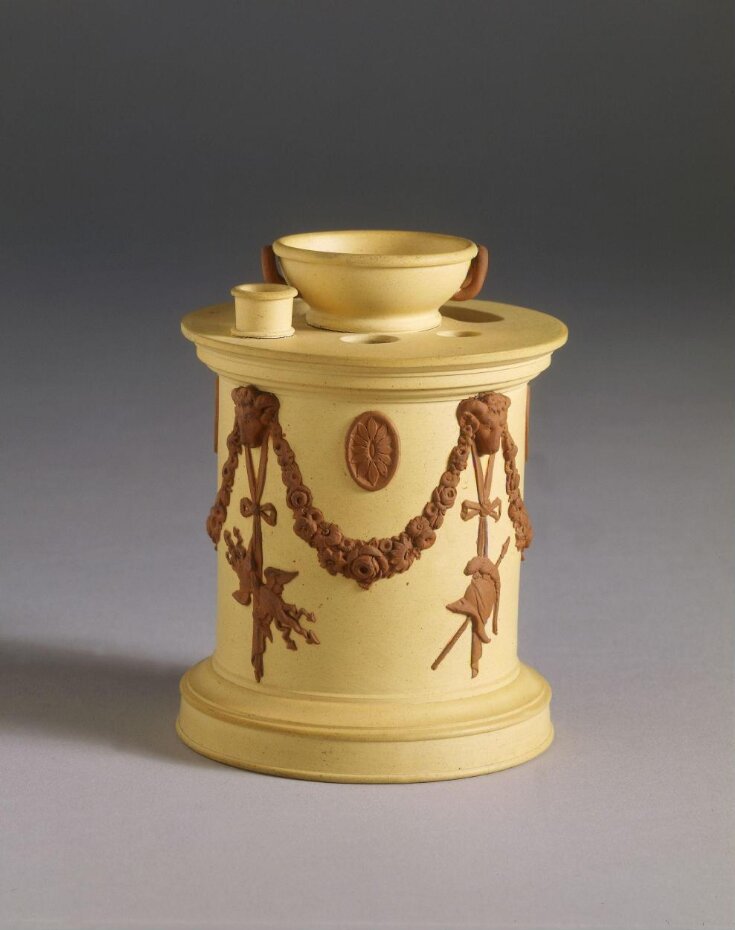
'Pyrophorus vases' were ancestors of the modern match box. Their name derived from the Greek, pur for 'fire' and phoros for 'bringing'. 'Instant light boxes' had been made in metal since 1810, and in 1812 Wedgwood began to manufacture them in a decorative ceramic version. The idea of making them in pottery came from the chemists Accum & Garden of Compton Street, Soho, London, who supplied Wedgwood with the matches, acid and acid bottles. The vases were soon copied at Josiah Spode's factory.
Use
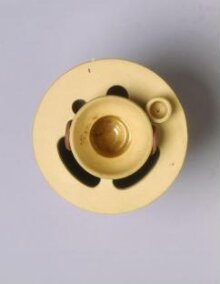
Wooden splints were held in the central hole. One end of the splints had been dipped in chlorate of potash and sugar. When dipped in sulphuric acid these produced a flame. Pyrophorus vases were initially popular, probably because of their novelty, but they were not made after about 1830. Soon after this date the first friction matches of the modern type were introduced. By the mid-19th century the original purpose of these vases had been forgotten, and for more than a century they were thought to have been inkwells.
'Pyrophorus vases' were ancestors of the modern match box. Their name derived from the Greek, pur for 'fire' and phoros for 'bringing'. 'Instant light boxes' had been made in metal since 1810, and in 1812 Wedgwood began to manufacture them in a decorative ceramic version. The idea of making them in pottery came from the chemists Accum & Garden of Compton Street, Soho, London, who supplied Wedgwood with the matches, acid and acid bottles. The vases were soon copied at Josiah Spode's factory.
Use
Wooden splints were held in the central hole. One end of the splints had been dipped in chlorate of potash and sugar. When dipped in sulphuric acid these produced a flame. Pyrophorus vases were initially popular, probably because of their novelty, but they were not made after about 1830. Soon after this date the first friction matches of the modern type were introduced. By the mid-19th century the original purpose of these vases had been forgotten, and for more than a century they were thought to have been inkwells.
Object details
| Categories | |
| Object type | |
| Materials and techniques | Cane-coloured stoneware with <i>rosso antico</i> reliefs |
| Brief description | Pyrophorus vase, cane-coloured stoneware with rosso antico reliefs, Josiah Wedgwood and Sons Ltd., England (Etruria), ca. 1815 |
| Physical description | Pyrophorus vase of cane-coloured stoneware, in the form of an altar decorated in red relief with attributes of Jupiter, Mars, and Mercury. |
| Dimensions |
|
| Marks and inscriptions | 'WEDGWOOD' and 'D' (Impressed) |
| Gallery label | Pyrophorous vase
made at the factory of Josiah Wedgwood, Etruria, Staffordshire, about 1815
Marks: 'WEDGWOOD' and 'D', impressed
Caneware with 'Rosso Antico' reliefs
2380-1901 Jermyn Street Collection
Pyrophorous vases contained wooden spills and chemicals that could be combined to create a flame. They were first made in 1812.(23/05/2008) |
| Credit line | Transferred from the Museum of Practical Geology |
| Object history | Pyrophorous vases contained wooden spills and chemicals that could be combined to create a flame. They were first made in 1812. |
| Subjects depicted | |
| Summary | Object Type 'Pyrophorus vases' were ancestors of the modern match box. Their name derived from the Greek, pur for 'fire' and phoros for 'bringing'. 'Instant light boxes' had been made in metal since 1810, and in 1812 Wedgwood began to manufacture them in a decorative ceramic version. The idea of making them in pottery came from the chemists Accum & Garden of Compton Street, Soho, London, who supplied Wedgwood with the matches, acid and acid bottles. The vases were soon copied at Josiah Spode's factory. Use Wooden splints were held in the central hole. One end of the splints had been dipped in chlorate of potash and sugar. When dipped in sulphuric acid these produced a flame. Pyrophorus vases were initially popular, probably because of their novelty, but they were not made after about 1830. Soon after this date the first friction matches of the modern type were introduced. By the mid-19th century the original purpose of these vases had been forgotten, and for more than a century they were thought to have been inkwells. |
| Collection | |
| Accession number | 2380-1901 |
About this object record
Explore the Collections contains over a million catalogue records, and over half a million images. It is a working database that includes information compiled over the life of the museum. Some of our records may contain offensive and discriminatory language, or reflect outdated ideas, practice and analysis. We are committed to addressing these issues, and to review and update our records accordingly.
You can write to us to suggest improvements to the record.
Suggest feedback
You can write to us to suggest improvements to the record.
Suggest feedback
| Record created | March 27, 2003 |
| Record URL |
Download as: JSONIIIF Manifest
