Sardine Fork
1875-1900 (made)
| Artist/Maker | |
| Place of origin |
Object Type
The complicated dining etiquette of the period encouraged the development of specific utensils for eating and serving particular foods. Sardine forks were a Victorian refinement for serving the expensive and popular tinned fish.
Dining Etiquette
Dining etiquette formed an important part of the Victorian code of polite society. The Manners and Tone of Good Society, first published in 1879, outlined the correct conduct of the dinner party but focused on the complicated and changing use of cutlery. With a few exceptions (such as for eating bread and some fruit) touching food with the fingers was frowned upon. Diners were presented with an alarming and growing range of specialist utensils for eating particular foods. It was important to be able to recognise items such as lobster picks, sardine forks and grape scissors, and to know how to use them correctly.
Design & Designing
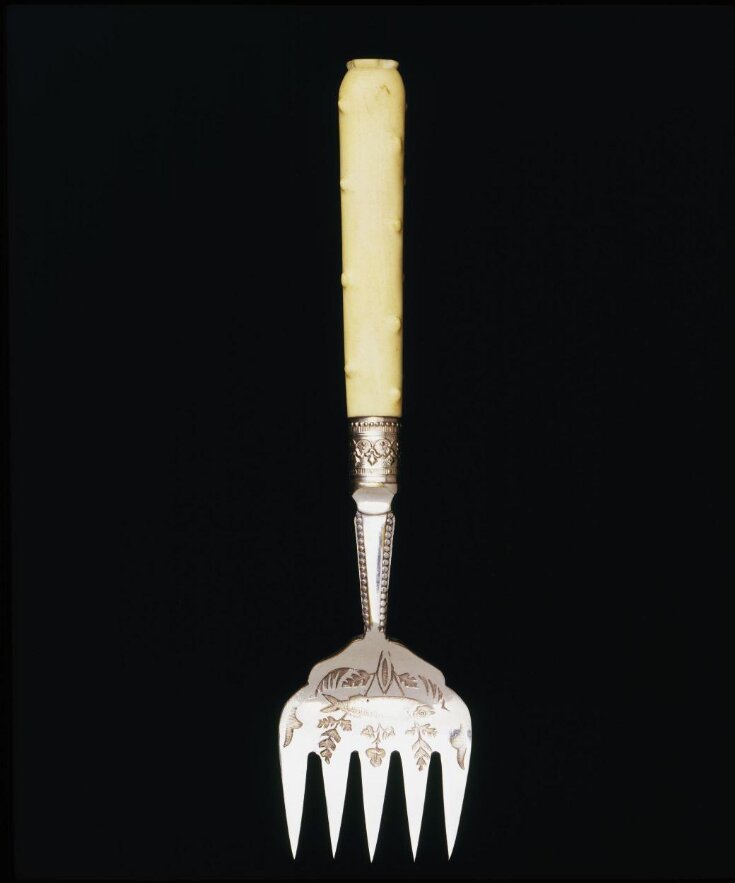
The engraved fish incorporated into the design suggests the fork's function. However, the broad, five-pronged shape of the fork and the short handle are very similar to the form of the bread fork, and it is possible that forks with a less specific decoration could have been used to serve bread.
The complicated dining etiquette of the period encouraged the development of specific utensils for eating and serving particular foods. Sardine forks were a Victorian refinement for serving the expensive and popular tinned fish.
Dining Etiquette
Dining etiquette formed an important part of the Victorian code of polite society. The Manners and Tone of Good Society, first published in 1879, outlined the correct conduct of the dinner party but focused on the complicated and changing use of cutlery. With a few exceptions (such as for eating bread and some fruit) touching food with the fingers was frowned upon. Diners were presented with an alarming and growing range of specialist utensils for eating particular foods. It was important to be able to recognise items such as lobster picks, sardine forks and grape scissors, and to know how to use them correctly.
Design & Designing
The engraved fish incorporated into the design suggests the fork's function. However, the broad, five-pronged shape of the fork and the short handle are very similar to the form of the bread fork, and it is possible that forks with a less specific decoration could have been used to serve bread.
Object details
| Categories | |
| Object type | |
| Materials and techniques | Electroplated nickel silver, with celluloid handle |
| Brief description | Sardine fork, Electroplated nickel silver, with plastic (celluloid) handle, unmarked; 1870-1890. |
| Dimensions |
|
| Gallery label | British Galleries:
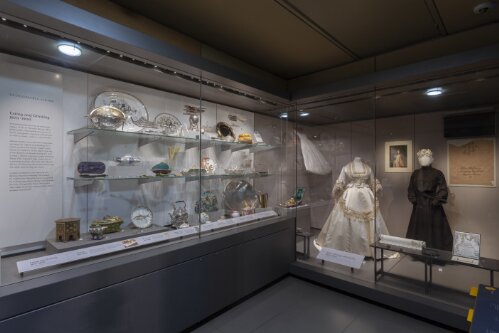
Tinned food was a novelty for the Victorians and sardines were served for breakfast, at high tea or as hors d'oeuvres at dinner. Specialist serving vessels or sardine boxes in metal and ceramics as well as sardine tongs and forks were developed to serve and eat the expensive tinned fish with greater elegance.(27/03/2003) |
| Object history | Made in England |
| Historical context | The complicated dining etiquette of the period encouraged the development of specific utensils for eating and serving particular foods. Sardine forks were a Victorian refinement for serving the expensive and popular tinned fish. Dining Etiquette Dining etiquette formed an important part of the Victorian code of polite society. The Manners and Tone of Good Society, first published in 1879, outlined the correct conduct of the dinner party but focused on the complicated and changing use of cutlery. With a few exceptions (such as for eating bread and some fruit) touching food with the fingers was frowned upon. Diners were presented with an alarming and growing range of specialist utensils for eating particular foods. It was important to be able to recognise items such as lobster picks, sardine forks and grape scissors, and to know how to use them correctly. Design & Designing The engraved fish incorporated into the design suggests the fork's function. However, the broad, five-pronged shape of the fork and the short handle are very similar to the form of the bread fork, and it is possible that forks with a less specific decoration could have been used to serve bread. |
| Summary | Object Type The complicated dining etiquette of the period encouraged the development of specific utensils for eating and serving particular foods. Sardine forks were a Victorian refinement for serving the expensive and popular tinned fish. Dining Etiquette Dining etiquette formed an important part of the Victorian code of polite society. The Manners and Tone of Good Society, first published in 1879, outlined the correct conduct of the dinner party but focused on the complicated and changing use of cutlery. With a few exceptions (such as for eating bread and some fruit) touching food with the fingers was frowned upon. Diners were presented with an alarming and growing range of specialist utensils for eating particular foods. It was important to be able to recognise items such as lobster picks, sardine forks and grape scissors, and to know how to use them correctly. Design & Designing The engraved fish incorporated into the design suggests the fork's function. However, the broad, five-pronged shape of the fork and the short handle are very similar to the form of the bread fork, and it is possible that forks with a less specific decoration could have been used to serve bread. |
| Collection | |
| Accession number | M.32-2000 |
About this object record
Explore the Collections contains over a million catalogue records, and over half a million images. It is a working database that includes information compiled over the life of the museum. Some of our records may contain offensive and discriminatory language, or reflect outdated ideas, practice and analysis. We are committed to addressing these issues, and to review and update our records accordingly.
You can write to us to suggest improvements to the record.
Suggest feedback
You can write to us to suggest improvements to the record.
Suggest feedback
| Record created | September 22, 2000 |
| Record URL |
Download as: JSONIIIF Manifest
