
Tombstone of Cando di Cando
Tombstone
ca. 1447 (made)
ca. 1447 (made)
| Artist/Maker | |
| Place of origin |
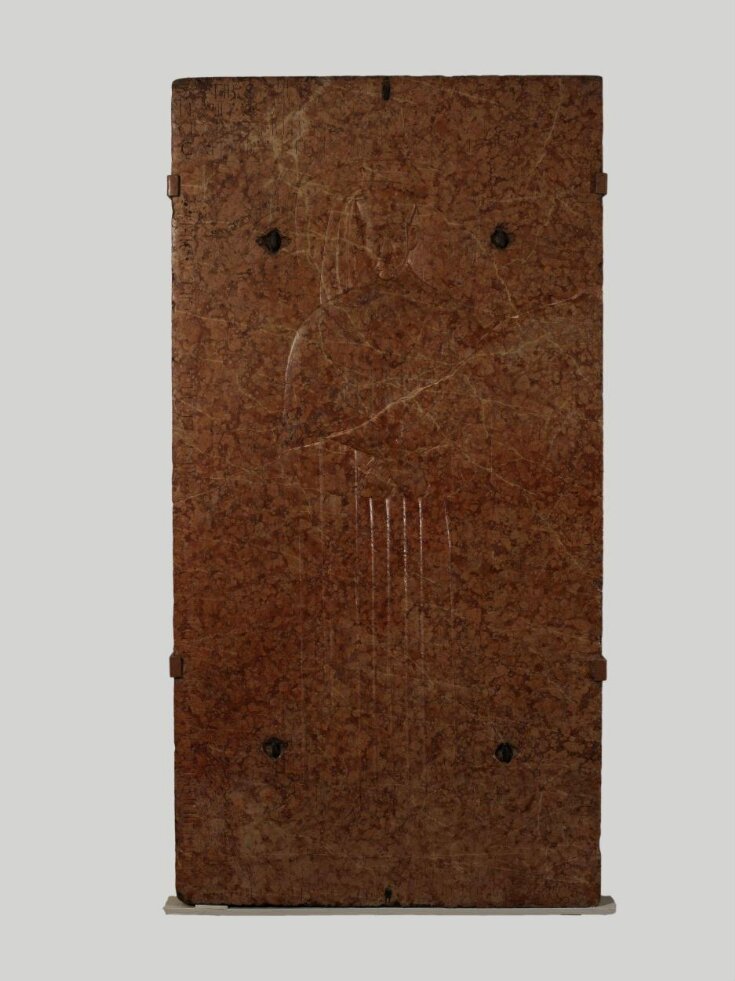
This slab shows the effigy of the deceased, Cando di Cando (d. 1447), dressed as a University teacher, together with inscriptions around the edge in Latin. On the right side, base and left it reads: here lies ... Cando de Cando of Padua, Doctor of Medicine and teacher, who died in the year of our Lord 1447, on Sunday 29 July at 10 o'clock.
The tomb of Cando di Cando is recorded in the church of Santa Giustina at Monselice (near Padua) by 17th century sources, which also give details of the missing parts of the inscription. The slab would originally have been set into the floor of the church and over the centuries became worn by footsteps. Cando spent most of his career in the University of Padua, where he taught medicine and astrology. The tomb slab presumably dates from shortly after Cando's death and may have been carved by Paduan stone-masons rather than in a particular sculptor's workshop.
The tomb of Cando di Cando is recorded in the church of Santa Giustina at Monselice (near Padua) by 17th century sources, which also give details of the missing parts of the inscription. The slab would originally have been set into the floor of the church and over the centuries became worn by footsteps. Cando spent most of his career in the University of Padua, where he taught medicine and astrology. The tomb slab presumably dates from shortly after Cando's death and may have been carved by Paduan stone-masons rather than in a particular sculptor's workshop.
Object details
| Categories | |
| Object type | |
| Title | Tombstone of Cando di Cando (generic title) |
| Materials and techniques | Verona marble in very low relief |
| Brief description | Tombstone, Verona marble, of Cando di Cando, Italy (Padua), ca. 1447 |
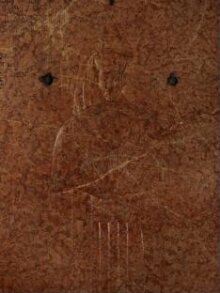
| Physical description | The figure is represented in very low relief, wearing a gown and cap, with the head resting on a pillow. Lightly incised above and beside the effigy is an arch supported by twisted columns. Over the head and round the sides and bottom of the slab are inscriptions. |
| Dimensions |
|
| Marks and inscriptions |
|
| Object history | Given by Mr. J H Fitzhenry. The tomb of Cando di Cando is recorded in the church of Santa Giustina at Monselice (near Padua) by 17th century sources, which also give details of the missing parts of the inscription. The slab would originally have been set into the floor of the church and over the centuries became worn by footsteps. |
| Subjects depicted | |
| Summary | This slab shows the effigy of the deceased, Cando di Cando (d. 1447), dressed as a University teacher, together with inscriptions around the edge in Latin. On the right side, base and left it reads: here lies ... Cando de Cando of Padua, Doctor of Medicine and teacher, who died in the year of our Lord 1447, on Sunday 29 July at 10 o'clock. The tomb of Cando di Cando is recorded in the church of Santa Giustina at Monselice (near Padua) by 17th century sources, which also give details of the missing parts of the inscription. The slab would originally have been set into the floor of the church and over the centuries became worn by footsteps. Cando spent most of his career in the University of Padua, where he taught medicine and astrology. The tomb slab presumably dates from shortly after Cando's death and may have been carved by Paduan stone-masons rather than in a particular sculptor's workshop. |
| Bibliographic references |
|
| Collection | |
| Accession number | A.11-1911 |
About this object record
Explore the Collections contains over a million catalogue records, and over half a million images. It is a working database that includes information compiled over the life of the museum. Some of our records may contain offensive and discriminatory language, or reflect outdated ideas, practice and analysis. We are committed to addressing these issues, and to review and update our records accordingly.
You can write to us to suggest improvements to the record.
Suggest feedback
You can write to us to suggest improvements to the record.
Suggest feedback
| Record created | June 24, 2009 |
| Record URL |
Download as: JSONIIIF Manifest
