Serpentine Mazer
Mazer
ca. 1500 (made)
ca. 1500 (made)
| Artist/Maker | |
| Place of origin |
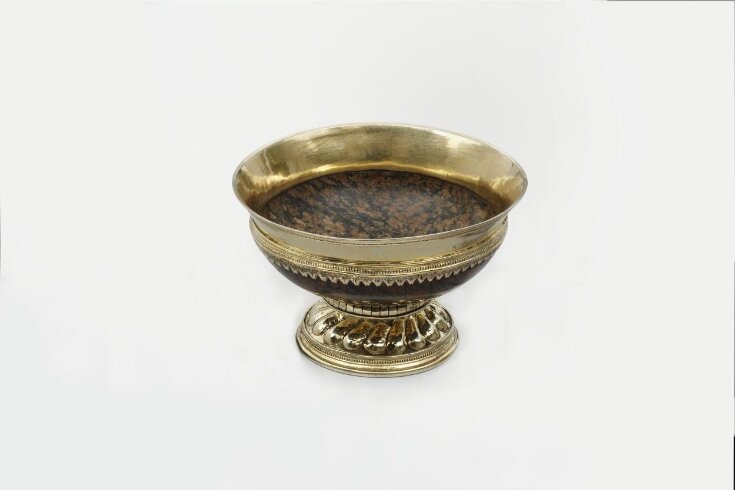
Mazers are wide, shallow drinking bowls made from the burrs of a maple tree, mounted with a rim of gold or silver. They were costly versions of the universally used plain wooden drinking bowl.Wooden bowls were widely used and cheap in the medieval and Renaissance periods. This bowl, however, is made of precious serpentine marble, although it otherwise has the traditional size and shape of a late medieval mazer, made of maplewoood. Goldsmiths often incorporated in their work precious or semi- precious stones or rarities from distant lands, like coconut shells. These materials added a touch of exoticism to their objects and increased their value. It is likely that this mazer was owned by a wealthy person, and that it was designed to be displayed and admired, as well as used.
Mazers are the most numerous form of surviving drinking vessel from England, and were widely used in the medieval period. The word mazer is derived from the Old High German masa meaning 'spot', because certain sorts of maples were mottled in colour.Maplewood has a fine grain, and withstands continual wetting and drying without warping. Wooden bowls of this design probably influenced the shape of the plain drinking bowls of precious metal which no longer survive from England, but which are known from Germany, Scandinavia and France, such as those in the Rouen treasure ( V&A 106-9-1865).
Mazers are the most numerous form of surviving drinking vessel from England, and were widely used in the medieval period. The word mazer is derived from the Old High German masa meaning 'spot', because certain sorts of maples were mottled in colour.Maplewood has a fine grain, and withstands continual wetting and drying without warping. Wooden bowls of this design probably influenced the shape of the plain drinking bowls of precious metal which no longer survive from England, but which are known from Germany, Scandinavia and France, such as those in the Rouen treasure ( V&A 106-9-1865).
Object details
| Categories | |
| Object type | |
| Title | Serpentine Mazer (popular title) |
| Materials and techniques | Silver-gilt mounts, serpentine marble |
| Brief description | Serpentine mazer, the mounts of silver gilt, England, ca.1500 |
| Physical description | Mazer with a turned serpentine bowl and silver-gilt mounts. Silver-gilt foot embossed with eighteen lobes. Rim clapsed by notched chased triangles with subsidiary triangles between them. The gilding has been renewed. The underside of the bowl support is ungilt. |
| Dimensions |
|
| Gallery label | BOWL
Serpentine marble mounted in silver-gilt
English; first quarter of the 16th century |
| Object history | Per Crichton at the Swaythling Sale Historical significance: Wooden bowls were common and cheap in the medieval and Renaissance periods. This bowl however is made of precious serpentine marble, although it otherwise has the traditional size and shape of a late medieval mazer, made of maplewoood. Goldsmiths often incorporated in their work precious or semi- precious stones or rarities from distant lands, like coconut shells. These materials added a touch of exoticism to their objects and increased their value. It is likely that this mazer was owned by a wealthy person, and that it was designed to be displayed and admired as well as used. Another serpentine bowl in the collection (650-1865), displaying the arms of the Order of St John, was probably used as an ornament rather than as a functional object. |
| Historical context | Mazers are wide, shallow drinking bowls made from the burrs of a maple tree, mounted with a rim of gold or silver. They were costly versions of the universally used plain wooden drinking bowl. They are the most numerous form of surviving drinking vessel from England, and were widely used in the medieval period. The word mazer is derived from the Old High German masa meaning 'spot', because certain sorts of maples were mottled in colour.Maplewood has a fine grain, and withstands continual wetting and drying without warping. Wooden bowls of this design probably influenced the shape of the plain drinking bowls of precious metal which no longer survive from England, but which are known from Germany, Scandinavia and France, such as those in the Rouen treasure ( V&A 106-9-1865). |
| Summary | Mazers are wide, shallow drinking bowls made from the burrs of a maple tree, mounted with a rim of gold or silver. They were costly versions of the universally used plain wooden drinking bowl.Wooden bowls were widely used and cheap in the medieval and Renaissance periods. This bowl, however, is made of precious serpentine marble, although it otherwise has the traditional size and shape of a late medieval mazer, made of maplewoood. Goldsmiths often incorporated in their work precious or semi- precious stones or rarities from distant lands, like coconut shells. These materials added a touch of exoticism to their objects and increased their value. It is likely that this mazer was owned by a wealthy person, and that it was designed to be displayed and admired, as well as used. Mazers are the most numerous form of surviving drinking vessel from England, and were widely used in the medieval period. The word mazer is derived from the Old High German masa meaning 'spot', because certain sorts of maples were mottled in colour.Maplewood has a fine grain, and withstands continual wetting and drying without warping. Wooden bowls of this design probably influenced the shape of the plain drinking bowls of precious metal which no longer survive from England, but which are known from Germany, Scandinavia and France, such as those in the Rouen treasure ( V&A 106-9-1865). |
| Bibliographic references |
|
| Collection | |
| Accession number | M.248-1924 |
About this object record
Explore the Collections contains over a million catalogue records, and over half a million images. It is a working database that includes information compiled over the life of the museum. Some of our records may contain offensive and discriminatory language, or reflect outdated ideas, practice and analysis. We are committed to addressing these issues, and to review and update our records accordingly.
You can write to us to suggest improvements to the record.
Suggest feedback
You can write to us to suggest improvements to the record.
Suggest feedback
| Record created | September 10, 2004 |
| Record URL |
Download as: JSONIIIF Manifest
